Distributorship Business in 2026: Opportunities, Investment, Benefits, and How to Get Started
The Indian distribution industry is evolving rapidly in 2026, creating new opportunities for entrepreneurs, retailers, wholesalers, and aspiring business owners. With the growth of e-commerce, expanding consumer demand, new product launches, and increasing demand for regional distribution networks, starting a distributorship business has become an attractive option for people who want to build a long-term business.
A distributorship business allows entrepreneurs to partner with manufacturers or established brands to supply products to retailers, wholesalers, dealers, and other businesses within a specific territory. Depending on the brand, product category, and agreement, distributors may receive access to established products, marketing support, and defined sales territories.
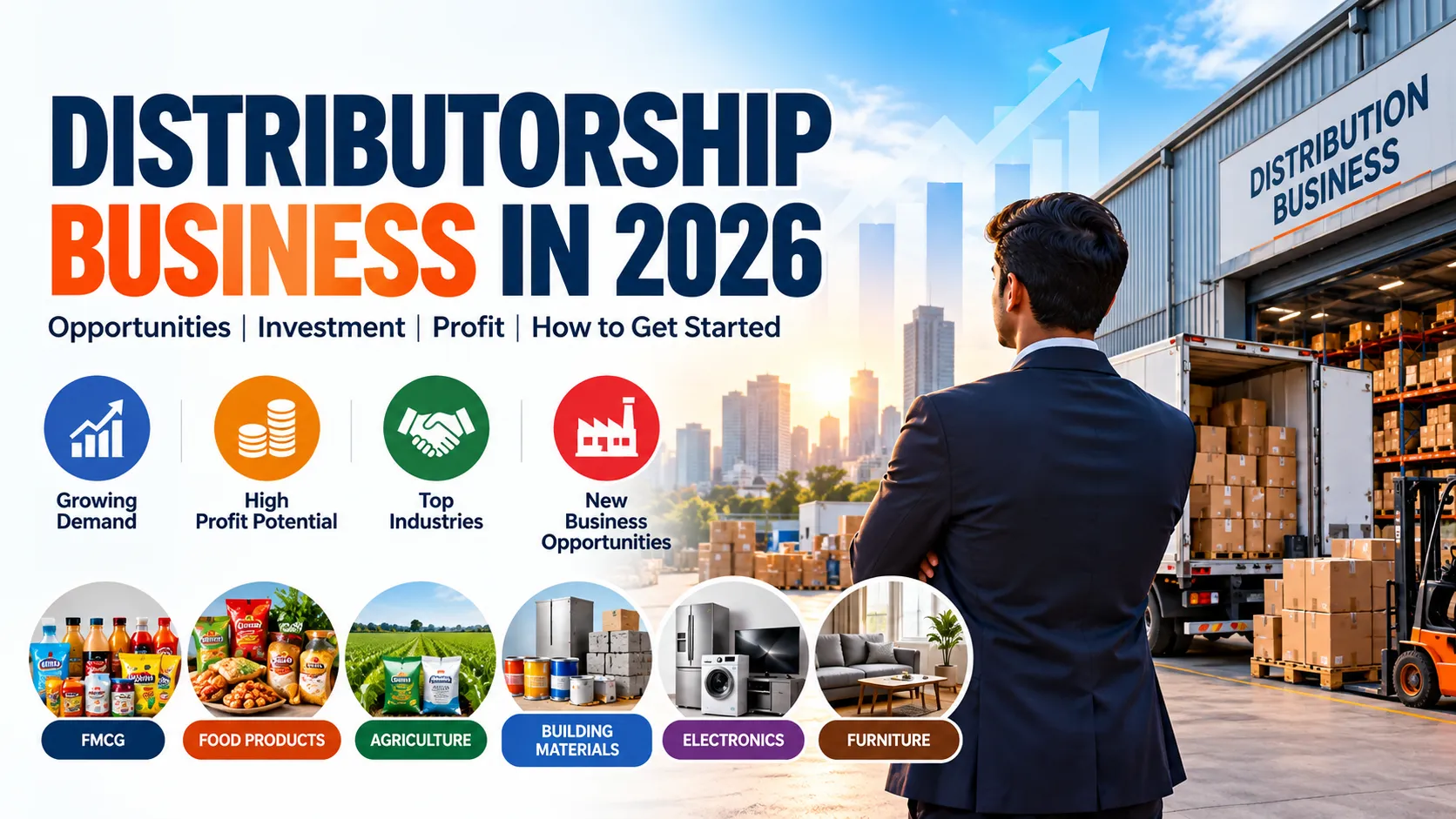
From FMCG products and packaged foods to agricultural inputs, building materials, electronics, and furniture, several industries offer potential distributorship opportunities in India.
However, choosing the right company, understanding the investment requirements, evaluating profit margins, and building a reliable distribution network are essential for long-term success.
In this guide, we will explore the distributorship business in 2026, popular industries, investment considerations, potential benefits, and practical steps to get started.
What Is a Distributorship Business?
A distributorship business involves purchasing or receiving products from manufacturers or authorized suppliers and distributing them to retailers, dealers, wholesalers, or other businesses.
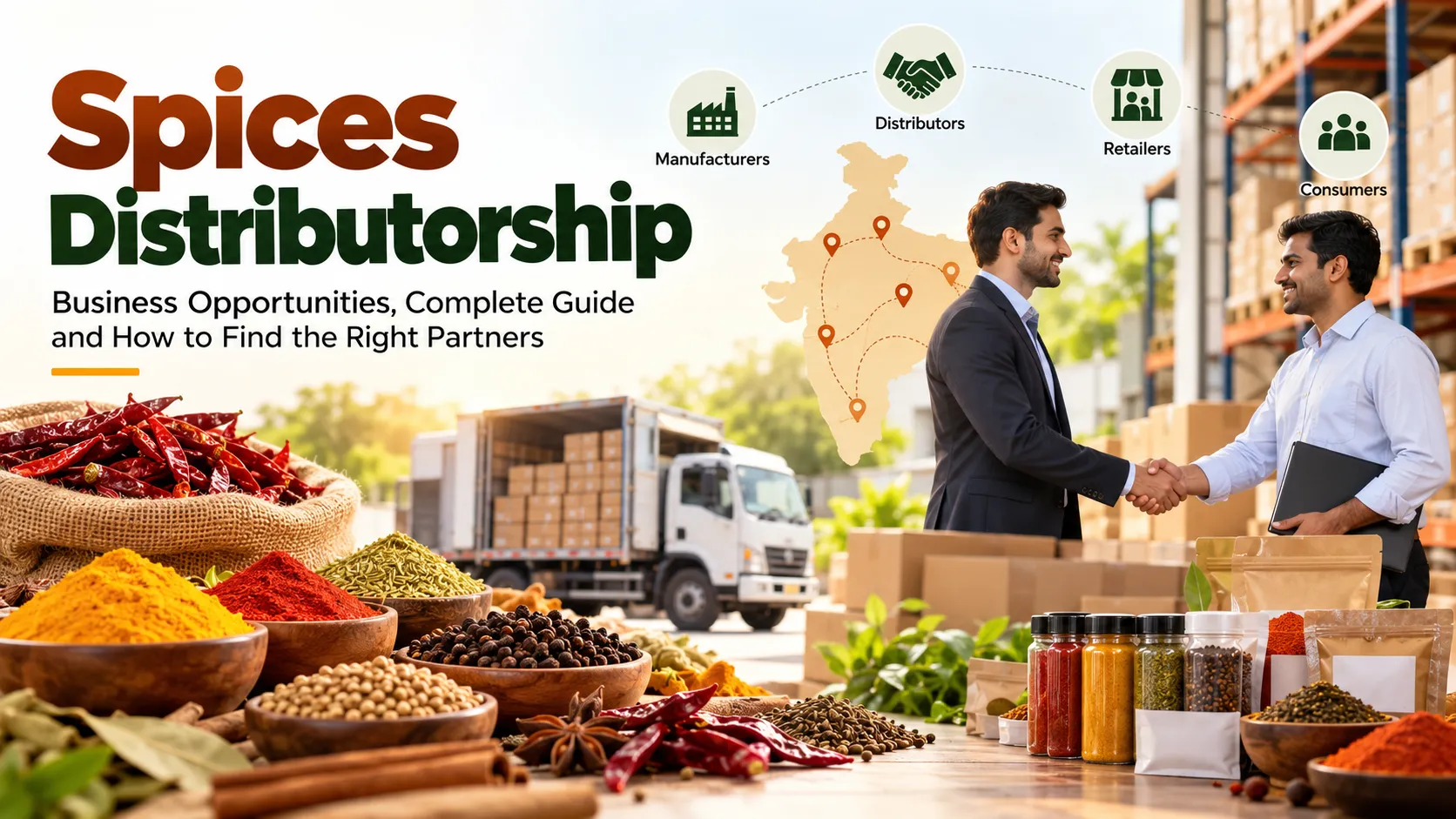
Distributors act as an important link between manufacturers and the market. They help companies expand their geographical reach, improve product availability, and establish relationships with local buyers.
For example, a packaged food manufacturer may appoint distributors in different cities. Each distributor supplies products to local grocery stores, supermarkets, and other retailers. The manufacturer benefits from a wider distribution network, while the distributor earns through product margins or other agreed commercial arrangements.
A distributorship agreement may include details about territory, minimum order quantities, payment terms, pricing, sales targets, exclusivity, and marketing responsibilities.
Before entering any distributorship business, entrepreneurs should carefully review these terms and understand their financial obligations.
Why Is the Distributorship Business in 2026 a Promising Opportunity?
The distributorship business in 2026 offers opportunities across established industries and emerging product categories. Several factors are contributing to this potential.
1. Growing Demand for Consumer Products
Everyday products such as groceries, packaged foods, personal care items, cleaning supplies, and household essentials require regular replenishment. Manufacturers depend on distributors to make these products available across different markets.
This creates opportunities for entrepreneurs who can develop strong relationships with retailers and maintain consistent product availability.
2. Expansion of Regional and Local Markets
Businesses are increasingly looking beyond major metropolitan areas to reach smaller cities, towns, and developing markets. Regional distributors can help brands enter these locations more efficiently because they understand local purchasing habits, retailers, and logistics.
Entrepreneurs with strong local networks may find opportunities in underserved territories.
3. Increasing Number of Brands and Manufacturers
New companies continue to introduce products in categories such as food processing, home improvement, agriculture, personal care, and consumer goods.
Many manufacturers need distribution partners to expand without building their own sales and delivery infrastructure in every market.
This creates potential opportunities for people searching for distributorship opportunities in India.
4. Technology-Driven Distribution
Digital tools are transforming the way distributors manage orders, inventory, customer relationships, and sales performance.
Inventory software, digital payments, online product catalogs, and business-to-business platforms can help distributors manage operations more efficiently.
Technology also makes it easier for manufacturers and distributors to discover potential business partners beyond their immediate geographical areas.
5. Opportunities for Different Investment Levels
Not every distributorship requires a large warehouse or a substantial initial investment. Requirements depend on the industry, product category, territory, inventory model, and company agreement.
Some businesses can begin with a relatively small inventory and a focused customer base, while others require significant working capital, storage facilities, vehicles, and staff.
Entrepreneurs should choose an opportunity that matches their actual financial capacity rather than relying on advertised earning claims.
Best Distributorship Business Opportunities in India for 2026
Choosing the right product category is one of the most important decisions when starting a distributorship business. The following industries are worth evaluating based on local demand, competition, available capital, and company requirements.
1. FMCG Distributorship
Fast-moving consumer goods, commonly known as FMCG products, include packaged foods, beverages, personal care products, cleaning supplies, and household essentials.
These products often have frequent purchase cycles, making them attractive to distributors serving grocery stores, supermarkets, and other retail outlets.
An FMCG distributorship may suit entrepreneurs who can manage frequent orders, maintain inventory, and develop relationships with a large number of retailers.
LSI keywords: FMCG distributorship, FMCG distributors in India, consumer goods distribution, wholesale distribution business, FMCG companies distributorship.
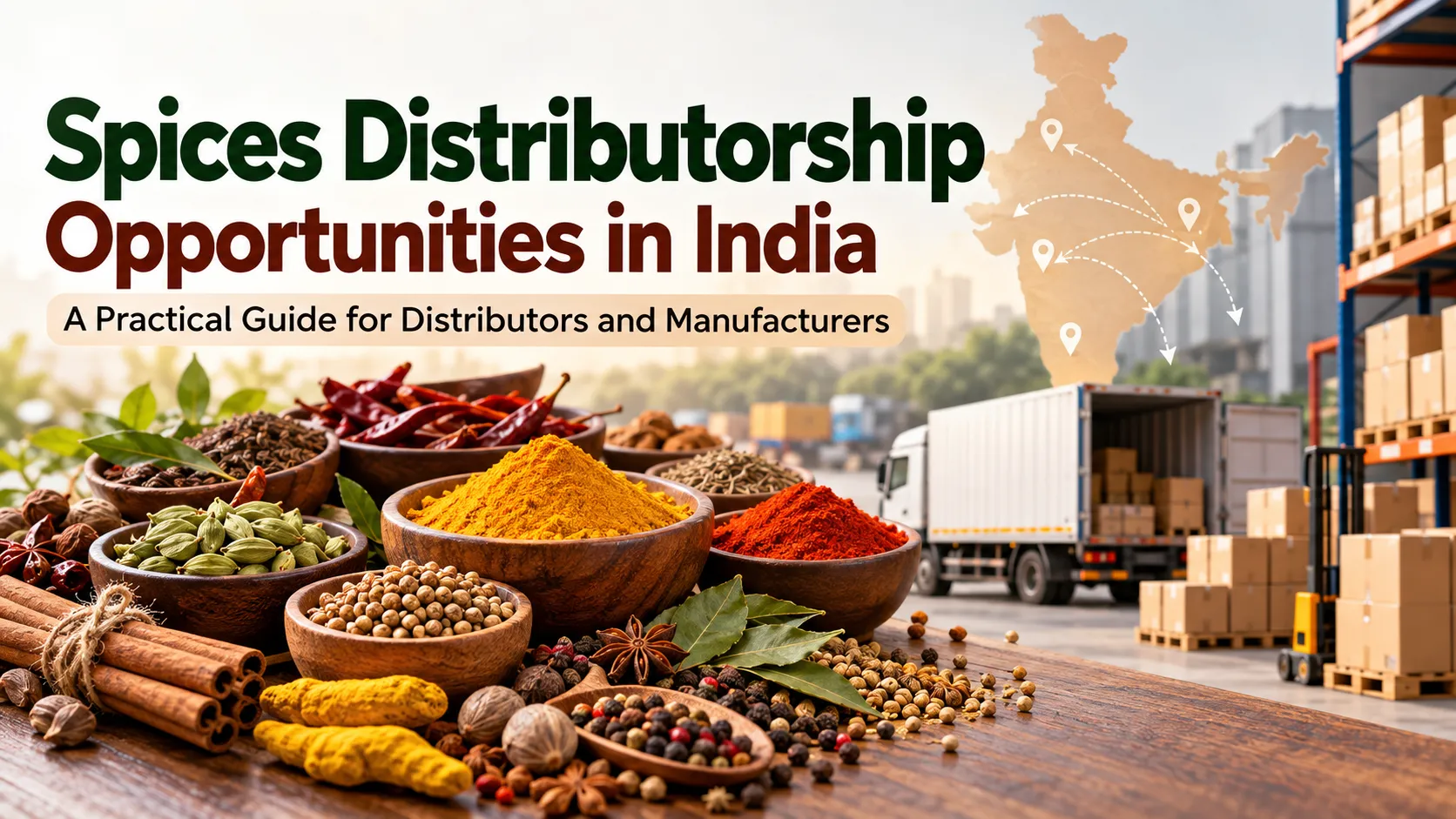
2. Food and Masala Distributorship
Packaged foods, spices, masalas, snacks, and regional food products can provide opportunities for distributors who understand local consumption patterns.
Demand, however, varies by location, brand recognition, pricing, product quality, and competition. Distributors should also evaluate shelf life, storage requirements, packaging, and applicable food regulations.
Building relationships with grocery stores, supermarkets, restaurants, and wholesalers can help develop a consistent sales network.
LSI keywords: food products distributorship, masala distributorship, spice distribution business, packaged food distributors, food wholesale business.
3. Agriculture Products Distributorship
Agricultural products such as fertilizers, seeds, micronutrients, irrigation equipment, and approved crop-care products serve farmers and agricultural retailers.
This category may be suitable for entrepreneurs operating in agricultural regions with established relationships among farmers, dealers, and local retailers.
However, certain agricultural products require specific licences, registrations, or other regulatory approvals. Seasonal demand and product storage must also be considered before investing.
LSI keywords: agricultural distributorship, fertilizer distributorship, agrochemical distribution, agriculture products dealer, farming supplies distributor.
4. Paint and Building Materials Distributorship
Construction materials, wall putty, paints, waterproofing products, adhesives, and related building supplies serve contractors, painters, hardware stores, and construction businesses.
Entrepreneurs can evaluate opportunities by studying local construction activity, dealer networks, product differentiation, transportation costs, and credit requirements.
Some products are bulky or heavy, so warehouse space and delivery arrangements can significantly affect operating expenses.
LSI keywords: paint distributorship, building materials distributor, wall putty distributorship, construction products distribution, hardware distributorship.
5. Furniture Distributorship
Furniture distribution includes products such as plastic chairs, tables, office furniture, home furniture, and institutional furniture.
Potential customers include furniture retailers, wholesalers, schools, offices, hotels, and commercial establishments.
Entrepreneurs should examine transportation costs, storage capacity, product durability, seasonal demand, and the manufacturer's replacement policy before selecting this category.
LSI keywords: furniture distributorship, plastic furniture distribution, furniture wholesale business, furniture dealers network, furniture distributor in India.
6. Electronics and Home Appliances Distributorship
Electronics and home appliances include accessories, lighting products, small appliances, and selected consumer electronics.
This category can offer opportunities, but distributors must carefully evaluate competition, warranty obligations, after-sales support, inventory depreciation, and product returns.
A reliable supplier and an effective service process are particularly important when products require repairs or technical assistance.
LSI keywords: electronics distributorship, electrical products distributor, home appliances distribution, electronics wholesale business, consumer electronics dealer.
7. Personal Care and Household Products
Personal care and household categories include soaps, shampoos, skincare products, detergents, cleaning supplies, and hygiene products.
These categories can appeal to distributors seeking repeat retail orders, especially when products have competitive pricing and a clear market position.
Success depends on product demand, retailer margins, brand trust, availability, and the ability to manage inventory efficiently.
LSI keywords: personal care distributorship, household products distributor, cleaning products distribution, beauty products wholesale, hygiene products distributor.
How Much Investment Is Required to Start a Distributorship Business in 2026?
The investment required depends on the product category, company policies, territory, inventory requirements, and operational model.
A distributor may need to allocate funds toward opening inventory, a security deposit if applicable, storage, transportation, staff, business registration, marketing, and working capital.
The following figures are illustrative planning ranges, not verified quotations or standard requirements for any particular company.
| Business scale | Illustrative starting capital |
|---|---|
| Small or local distribution setup | ₹50,000–₹2 lakh |
| Regional distribution operation | ₹2 lakh–₹10 lakh |
| Larger dealership or distributorship | ₹10 lakh–₹25 lakh or more |
Some opportunities may require less capital, while others may require substantially more. Always confirm the actual requirements directly with the manufacturer.
Key Costs to Consider
Initial inventory: The amount required to purchase products for your first sales cycle.
Security deposit or appointment fee: Some companies may request a refundable deposit or other documented charges. Verify the terms and avoid paying unexplained fees.
Warehouse and storage: Rent, utilities, shelving, security, and product-handling expenses.
Transportation: Delivery vehicles, fuel, freight, loading, and unloading costs.
Staff and operations: Salaries, order processing, bookkeeping, and customer support.
Working capital: Funds needed to continue operations while waiting for customers to pay outstanding invoices.
A practical budget should include a contingency reserve rather than using all available funds for initial inventory.
How to Calculate Profit in a Distributorship Business
Profitability depends on the difference between sales revenue and the total costs of operating the business.
Suppose a distributor purchases products for ₹80,000 and sells them for ₹1,00,000. The gross profit is ₹20,000, equivalent to a 20% gross margin on sales.
However, this is not the final net profit.
If transportation, storage, staff, damaged goods, financing, and other operating expenses total ₹12,000, the remaining operating profit is ₹8,000 before applicable taxes and any additional expenses.
This example demonstrates why distributors should calculate both gross margin and net profitability before committing to an opportunity.
Important factors include:
- Product purchase price and resale price.
- Distributor margin and retailer margin.
- Monthly sales volume.
- Delivery and storage costs.
- Credit periods and delayed payments.
- Returns, damaged products, and expired stock.
- Minimum order quantities and sales targets.
A company advertising a high margin does not automatically offer a more profitable business. Product demand, inventory turnover, and operating expenses matter just as much.
How to Start a Distributorship Business in 2026: Step-by-Step Guide
Starting a distribution business becomes more manageable when the process is divided into clear steps.
Step 1: Research Your Local Market
Identify the products people and businesses purchase regularly in your target territory.
Visit retailers, wholesalers, hardware stores, agricultural dealers, supermarkets, and other relevant buyers. Ask which brands they currently purchase, what problems they face, and which products they would consider stocking.
This research helps you identify potential demand before making a major investment.
Step 2: Select a Suitable Product Category
Choose a category based on your budget, experience, local demand, storage facilities, and access to potential customers.
Avoid choosing a product simply because its advertised profit margin looks attractive. A product with consistent demand and manageable costs may be more suitable than a high-margin product that sells slowly.
Step 3: Find Reliable Manufacturers and Brands
Search for established manufacturers, emerging brands, and companies actively expanding their distribution networks.
Review product quality, market reputation, pricing, supply reliability, existing distributors, and the terms of the proposed agreement.
Ask whether the company provides product catalogs, dealer leads, promotional material, sales training, and after-sales support where relevant.
Step 4: Verify the Distributorship Offer
Before paying any money, confirm that the person contacting you is authorized to represent the manufacturer.
Verify the company's official contact details, business registration information, payment recipient, written agreement, refund conditions, and territory rights.
Be cautious of guaranteed-profit claims, pressure to pay immediately, and requests to transfer money to unrelated personal accounts.
Step 5: Arrange Business Registration and Compliance
Depending on your business structure and the products you distribute, you may need GST registration, local business permissions, an appropriate trade licence, or product-specific approvals.
Food, agricultural inputs, and certain regulated products may involve additional requirements.
Consult the relevant authorities or a qualified professional to confirm the requirements applicable to your business.
Step 6: Build Your Retailer and Dealer Network
Prepare a list of potential buyers within your territory.
Introduce your products, explain their commercial benefits, share pricing information, and establish a regular follow-up process.
Strong distributor-retailer relationships can improve repeat orders, product visibility, and customer retention.
Step 7: Set Up Inventory and Logistics
Establish a process for tracking stock, recording orders, managing payments, and planning deliveries.
Use a spreadsheet or inventory management system to monitor fast-moving products, slow-moving stock, reorder points, and outstanding payments.
Efficient stock management can reduce unnecessary costs and improve cash flow.
Step 8: Promote Your Distribution Business
Use a combination of offline sales activity and digital channels.
Potential approaches include retailer visits, WhatsApp Business catalogs, local business directories, product brochures, search engine visibility, and targeted business advertising.
A professional online presence can also make it easier for manufacturers to discover your business when searching for distribution partners.
How to Find Distributorship Opportunities in India
Finding a suitable manufacturer is often one of the biggest challenges for aspiring distributors.
Traditional methods include attending trade fairs, contacting manufacturers directly, visiting wholesale markets, speaking with industry representatives, and obtaining referrals from existing retailers.
Digital B2B platforms provide another way to discover manufacturers, explore product categories, and connect with businesses looking to expand their distribution networks.
Use GrowDistributors to Discover Business Opportunities
GrowDistributors.com is a B2B platform designed to connect manufacturers, brands, and distributors.
Entrepreneurs exploring a distributorship business can use platforms like GrowDistributors to discover relevant companies and investigate potential business relationships across different industries.
Manufacturers can also use B2B platforms to improve business visibility and connect with prospective distribution partners.
When evaluating any opportunity, check the company's product range, location, commercial terms, territory availability, and verification details. Contact the company directly to confirm that the distributorship is currently available.
The right platform can simplify business discovery, but the final decision should always be based on due diligence and commercial suitability.
Common Mistakes to Avoid When Starting a Distributorship Business
Even a promising product category can become difficult to manage when basic business decisions are overlooked.
Choosing a Company Without Research
Do not rely solely on attractive advertisements or verbal promises. Investigate the manufacturer's reputation, product quality, supply record, and written commercial terms.
Investing Too Much in Initial Inventory
Large orders can tie up capital and create storage problems if products sell slowly. Start with a realistic sales forecast and understand the company's minimum order requirements.
Ignoring Cash Flow
Distributors may have to pay manufacturers before collecting payments from retailers. Plan for credit periods, overdue invoices, and unexpected expenses.
Overlooking Local Competition
Study existing brands, retailer preferences, pricing, and customer demand before entering a market.
Failing to Read the Agreement
Clarify territory rights, exclusivity, sales targets, returns, payment terms, termination conditions, and deposit refunds before signing.
Depending on a Single Customer
A distribution business becomes vulnerable when most revenue comes from one buyer. Build a broader network of retailers and commercial customers wherever practical.
Future Scope of the Distributorship Business Beyond 2026
The future of distribution is likely to involve a combination of traditional relationships and digital operations.
Manufacturers need reliable ways to reach more markets, while distributors need efficient tools to identify products, manage orders, and develop customer relationships.
Several developments may shape the sector:
- Digital B2B discovery: Online platforms can help manufacturers and distributors connect beyond their existing networks.
- Data-driven inventory management: Sales data can improve purchasing decisions and reduce slow-moving inventory.
- Regional market expansion: Brands may continue exploring underserved locations where local distribution partners can provide market access.
- Specialized distribution: Businesses focusing on specific industries or product categories may differentiate themselves through expertise and customer service.
- Better supply-chain coordination: Digital order management and logistics tools can improve visibility across the distribution process.
These developments create opportunities, but they do not guarantee success. Businesses will still need sound financial planning, dependable suppliers, reliable delivery, and consistent customer service.
Conclusion
A distributorship business in 2026 can be an opportunity for entrepreneurs who understand their market, choose suitable products, and build strong relationships with manufacturers and retailers.
Industries such as FMCG, food products, agriculture, building materials, furniture, electronics, and household products offer different business models and investment requirements.
Before starting, evaluate demand, calculate realistic margins, check the manufacturer's credibility, understand legal requirements, and maintain sufficient working capital.
For entrepreneurs looking to discover manufacturers and potential business partners, B2B platforms such as GrowDistributors.com can provide a starting point for exploring distribution opportunities.
The most sustainable approach is to build a distribution business around real customer demand, reliable operations, and long-term commercial relationships rather than chasing quick-profit promises.
Frequently Asked Questions (FAQs)
1. Is a distributorship business profitable in 2026?
A distributorship business can be profitable when the products have sufficient demand, purchase prices are competitive, operating expenses are controlled, and customers pay on time. Actual profitability varies by industry, company agreement, territory, and sales volume.
2. Which distributorship business is best in India in 2026?
FMCG, packaged foods, agricultural products, building materials, furniture, electronics, and household products are categories worth evaluating. The best option depends on local demand, investment capacity, competition, and the manufacturer's terms.
3. How much money is needed to start a distributorship business?
The required capital can range from a relatively small amount for a local operation to several lakhs or more for larger distribution networks. Inventory, deposits, storage, transportation, staffing, and working capital determine the actual requirement.
4. How can I find companies offering distributorship in India?
You can contact manufacturers directly, attend trade fairs, consult industry networks, and use B2B platforms such as GrowDistributors.com to discover companies and potential business partners. Always verify the offer directly with the manufacturer.
5. Can I start a distributorship business with low investment?
Yes, some companies offer smaller-scale distribution arrangements. However, availability depends on the product, territory, order requirements, and company policy. Start by comparing the complete costs rather than focusing only on the advertised entry fee.
6. What is the difference between a distributor and a dealer?
A distributor generally purchases products from a manufacturer and supplies them to retailers, dealers, or other business buyers, often across a defined territory. A dealer usually sells products to end customers or local buyers. The exact distinction depends on the company's business model and agreement.
7. Which documents are required for a distributorship business?
Commonly required documents may include identity and address proof, business registration details, bank information, GST registration where applicable, and a signed distributorship agreement. Product-specific licences or permissions may also be necessary.
8. How do I verify whether a distributorship offer is genuine?
Contact the manufacturer through its official website or verified contact details. Review the agreement, payment terms, company records, territory availability, and refund policy. Avoid making payments based only on verbal promises or guaranteed-profit claims.
9. Can I become a distributor without owning a warehouse?
Some companies may permit smaller operations, third-party warehousing, or other distribution arrangements. However, many product categories require appropriate storage facilities. Confirm the company's requirements before applying.
10. How can manufacturers find distributors for their products?
Manufacturers can build dealer networks, attend trade fairs, contact regional business associations, advertise distribution opportunities, and list their products on B2B platforms such as GrowDistributors.com to connect with potential distribution partners.