Distributorship Business in India: Complete Guide to Start
Starting a distributorship business in India can be an attractive option for entrepreneurs who want to build a business by working with established brands and manufacturers. Instead of manufacturing products yourself, you can distribute products to retailers, wholesalers, dealers, and other businesses in your target market.
From FMCG and food products to agriculture, electronics, electrical equipment, furniture, personal care, and building materials, companies across multiple industries rely on distribution networks to reach customers in different cities and regions.
As a result, searches such as "distributorship business in India," "distributorship opportunities in India, FMCG distributor wanted," and “companies looking for distributors” are relevant to entrepreneurs exploring this business model.
However, choosing the right distributorship requires more than finding a popular brand. You need to understand market demand, investment requirements, profit margins, inventory management, and the company's commercial terms.
In this guide, we explain how the distributorship business works, which sectors you can explore, how to find suitable opportunities, and how platforms such as GrowDistributors.com can help businesses discover potential distribution connections.
What Is a Distributorship Business?
A distributorship business is a commercial arrangement in which an individual or business works with a manufacturer or brand to distribute products within a particular territory or customer segment.
A distributor typically purchases products from a manufacturer or an authorised supply channel and sells them to retailers, wholesalers, dealers, or institutional buyers. Depending on the agreement, the distributor may also be responsible for product promotion, market development, inventory management, and customer relationships.
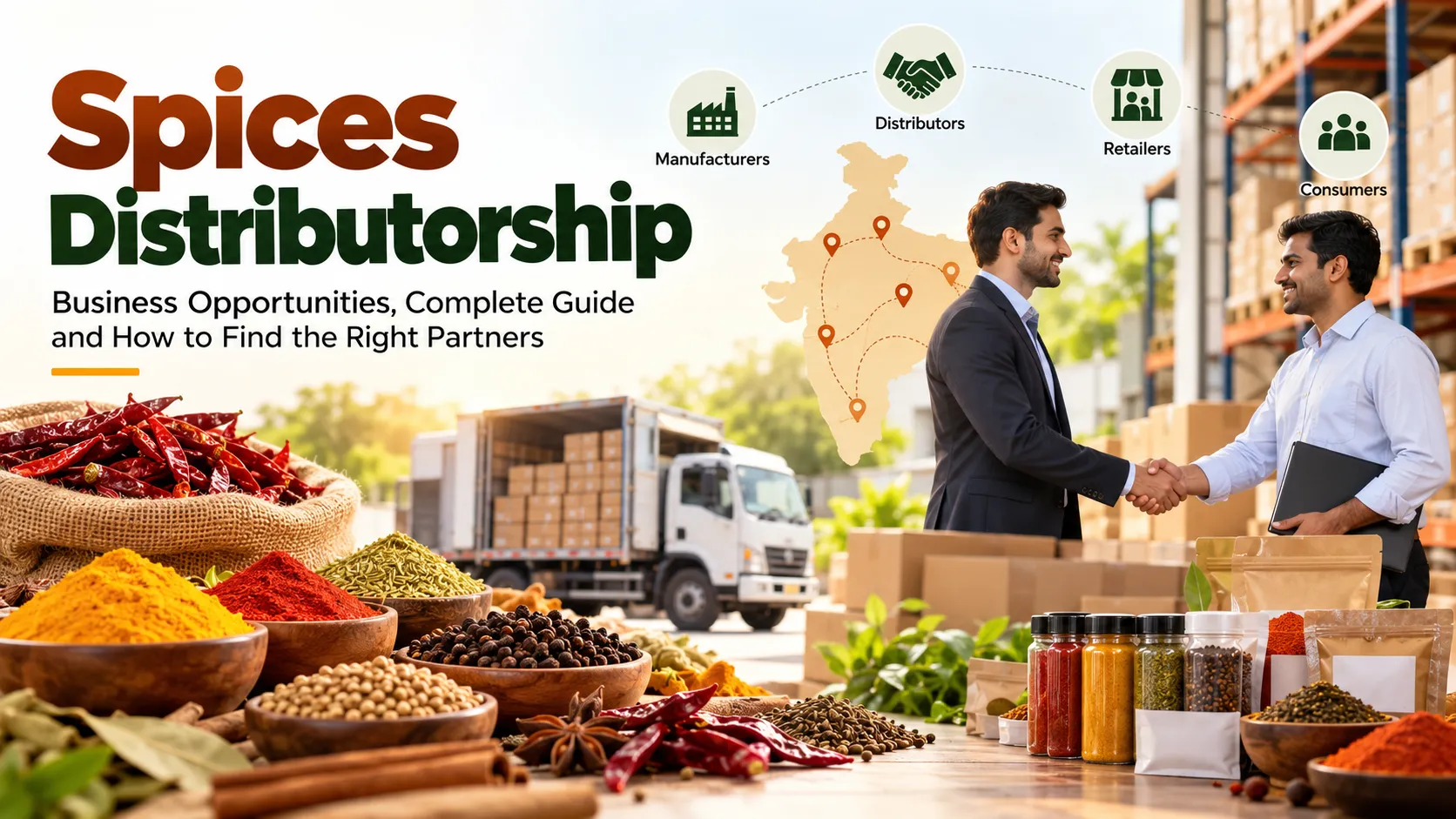
A typical distribution chain looks like this:
Manufacturer → Distributor → Wholesaler or Retailer → End Customer
The exact structure depends on the industry. Some companies appoint distributors directly, while others operate through super stockists, carrying and forwarding agents, dealers, or regional partners.
For example, a food manufacturer may appoint a distributor to supply packaged products to grocery stores in a particular district. The distributor maintains inventory, develops relationships with retailers, manages orders, and earns through the agreed commercial arrangement.
The business can grow when the distributor builds a reliable customer network, manages working capital effectively, and consistently supplies products that customers need.
Why Start a Distributorship Business in India?
India offers opportunities for distribution businesses across urban markets, smaller cities, and rural areas. Manufacturers need dependable partners who can introduce their products to new markets and maintain regular supplies.
Here are some reasons entrepreneurs consider this business model.
1. Opportunity to Work With Established Brands
A distributor can work with an existing brand rather than developing a product and building brand recognition from scratch. However, brand reputation alone does not guarantee sales; local demand and the commercial terms remain important.
2. Multiple Product Categories
You can explore distribution opportunities in several industries, including FMCG, agriculture, furniture, electrical products, food and beverages, healthcare, and personal care.
3. Potential for Repeat Orders
Products that customers purchase regularly can create recurring demand. For example, grocery retailers may reorder packaged food and household products frequently, depending on their sales and inventory levels.
4. Scope for Geographic Expansion
A distributor who establishes a strong local network may eventually explore additional territories, product lines, or complementary brands, subject to the relevant agreements.
5. Business-to-Business Relationships
Distribution depends heavily on relationships with manufacturers, retailers, dealers, and other business partners. Strong service, reliable delivery, and transparent communication can help develop long-term commercial relationships.
Types of Distributorship Businesses in India
Before investing, identify the industry that best matches your budget, experience, market knowledge, and business goals.
1. FMCG Distributorship
Fast-moving consumer goods (FMCG) include products such as packaged foods, beverages, personal care products, cleaning supplies, and household essentials.
FMCG distribution can be suitable for entrepreneurs who understand local retail markets and can manage regular orders, stock rotation, deliveries, and collections.
Examples of products: Snacks, biscuits, spices, packaged foods, soaps, detergents, and personal care items.
2. Food and Beverage Distributorship
Food manufacturers often need distribution partners to reach grocery stores, supermarkets, restaurants, hotels, and other commercial buyers.
Entrepreneurs considering this category should evaluate product shelf life, storage conditions, applicable food-business licensing, transportation requirements, and the company's return policy.
3. Agriculture Product Distributorship
Agricultural products may include seeds, fertilizers, agricultural equipment, irrigation products, and crop-care inputs.
Demand can vary by region, crop cycle, season, and local farming practices. Some product categories require specific licences or authorisations, so regulatory requirements must be checked before starting.
4. Furniture Distributorship
Furniture manufacturers may seek distributors or dealers who can supply products to furniture retailers, offices, hotels, institutions, and project buyers.
This category requires careful planning around storage space, transport, product damage, delivery costs, and the range of products offered.
5. Electrical and Electronics Distributorship
Electrical equipment, lighting products, cables, accessories, and electronic products can provide opportunities for entrepreneurs with access to retailers, contractors, dealers, and institutional customers.
Product authenticity, warranty terms, technical support, and after-sales service are important factors when selecting a company.
6. Personal Care and Cosmetics Distributorship
Personal care products and cosmetics are sold through retailers, salons, beauty stores, e-commerce sellers, and other channels.
Before choosing this category, evaluate product demand, competition, brand awareness, expiry dates, applicable product regulations, and the manufacturer's marketing support.
7. Building Materials and Hardware Distributorship
Construction materials, plumbing products, hardware, tools, and related supplies serve contractors, retailers, builders, and other businesses.
These categories may require greater storage capacity, transport planning, and working capital, depending on the products and territory.
How to Start a Distributorship Business in India
Starting a distribution business requires a clear plan. The following steps can help you assess an opportunity before making a financial commitment.
Step 1: Choose Your Product Category
Begin by identifying the products you want to distribute.
Consider the following questions:
- Is there sufficient demand in your target market?
- Who are your potential customers?
- How many competitors already supply these products?
- Are customers satisfied with the existing brands?
- Can you store and transport the products safely?
- Does the product category match your available investment?
Research local retailers, wholesalers, dealers, and institutional buyers before finalising your category.
Step 2: Research Companies and Manufacturers
Once you select a category, identify manufacturers and brands operating in that sector.
Search for terms such as:
- Companies looking for distributors
- Distributorship opportunities in India
- FMCG distributor wanted
- Distributors required for new products
- Become a distributor
- Dealer and distributor enquiry
- Wholesale distribution opportunities
Visit official company websites and check whether the business is currently accepting applications for your preferred territory.
Do not assume that every company advertising its products is actively appointing distributors.
Step 3: Evaluate the Market and Territory
A distributorship can perform differently in different locations. Study the demand, competition, number of potential customers, transportation infrastructure, and existing supply network in your target territory.
Speak with local retailers and business owners to understand which products sell regularly and where supply gaps may exist.
Also confirm whether the manufacturer has already appointed a distributor for your area. Territorial exclusivity should never be assumed unless it is clearly documented in the agreement.
Step 4: Calculate the Total Investment
The investment required depends on the company, product category, stock requirements, territory, and distribution model.
Prepare a budget that includes:
- Initial inventory purchases
- Any agreed security deposit
- Warehouse or godown rent
- Transportation and delivery expenses
- Staff salaries
- Billing software and business equipment
- Marketing and sales expenses
- Working capital for retailer credit and operating costs
There is no single investment amount suitable for every distributorship. A small regional operation and a large multi-brand distribution business can have very different financial requirements.
Request the company's commercial terms and prepare your own cash-flow forecast before proceeding.
Step 5: Complete the Required Registrations
Business registrations and licences depend on your legal structure, turnover, products, premises, and location.
Depending on the business, you may need to consider:
- PAN and business banking arrangements
- GST registration, where applicable
- Local trade or establishment permissions
- FSSAI registration or licensing for applicable food businesses
- Drug licences for applicable pharmaceutical distribution
- Other industry-specific approvals
Udyam registration may also be relevant to eligible micro, small, and medium enterprises. The official Udyam portal states that registration is free and based on self-declaration.
Verify the requirements with the relevant government department or a qualified professional before commencing operations.
Step 6: Review the Distributorship Agreement
Before signing, carefully examine the commercial terms.
Important points include:
- Territory and exclusivity rights
- Initial investment and minimum order quantities
- Distributor margins and incentive schemes
- Sales targets and performance conditions
- Payment terms
- Stock expiry, damage, and return policies
- Marketing support
- Agreement duration and termination conditions
- Refund terms for any security deposit
Ask for written clarification wherever the terms are unclear. Do not make payments based solely on verbal promises.
Step 7: Build Your Sales and Distribution Network
A distributor needs a practical plan for reaching customers and maintaining regular sales.
Identify potential retailers, wholesalers, dealers, and institutional buyers. Create a customer database, plan delivery routes, maintain accurate inventory records, and establish a clear payment-collection process.
Digital billing and inventory-management tools can help track stock, outstanding payments, customer orders, and sales performance.
Step 8: Monitor Performance and Expand Gradually
Track your business performance regularly.
Useful metrics include monthly sales, gross margin, operating expenses, inventory turnover, outstanding receivables, damaged stock, and repeat orders.
Expand into new territories or product categories only when your current operation is financially sustainable and your supply chain can support the additional workload.
How to Find Companies Looking for Distributors in India
One of the biggest challenges for aspiring distributors is identifying relevant companies and genuine business opportunities.
Traditional approaches include contacting manufacturers directly, attending trade exhibitions, speaking with industry associations, and approaching authorised regional representatives.
You can also explore online B2B platforms that help businesses discover brands, products, manufacturers, and distribution-related opportunities.
Explore GrowDistributors.com
GrowDistributors.com is a B2B platform designed to connect manufacturers, brands, distributors, and businesses.
For entrepreneurs looking for distributorship opportunities, the platform can serve as a starting point for exploring products and identifying potential business connections across different industries.
You can use the platform to explore relevant categories, discover businesses, and identify opportunities that may align with your target market.
For manufacturers and brands, a B2B platform can help increase business visibility and connect with potential distribution partners.
Visit GrowDistributors.com to explore the platform.
Remember that listings and introductions are a starting point, not a guarantee of appointment, profitability, or commercial success. Confirm each opportunity directly with the relevant company and review all terms before investing.
Common Mistakes to Avoid in the Distributorship Business
Even a promising product can become difficult to distribute if the business is poorly managed.
Choosing a Brand Without Research
A well-known brand is not automatically the best option. Evaluate local demand, competition, supply reliability, and the complete commercial arrangement.
Underestimating Working Capital
Money can become tied up in inventory and outstanding retailer payments. Maintain sufficient working capital to cover purchases, operating expenses, and collection delays.
Ignoring Unsold and Expired Inventory
Slow-moving or perishable stock can reduce profitability. Monitor stock movement and understand the company's return policy before accepting large orders.
Focusing Only on Sales
Higher sales do not necessarily mean higher profits. Consider product margins, delivery costs, staff expenses, discounts, bad debts, and other operating costs.
Trusting Unverified Distributorship Offers
Verify the company, its authorised representatives, and its payment instructions. Be cautious of pressure to pay immediately, guaranteed-profit promises, and deposits requested through personal accounts without proper documentation.
Frequently Asked Questions (FAQs)
1. Is a distributorship business profitable in India?
A distributorship business can be profitable, but results depend on product demand, sales volume, margins, operating costs, working capital, and the quality of execution. No distributorship guarantees a fixed profit.
2. How much investment is required to start a distributorship business?
The investment varies by product category, company, territory, inventory requirements, and infrastructure. Calculate stock purchases, deposits, rent, transportation, staff expenses, and working capital before committing.
3. Which distributorship is best in India?
There is no universally best distributorship. FMCG, food and beverages, agriculture, furniture, electrical products, personal care, and building materials may suit different entrepreneurs. Choose according to local demand, budget, expertise, and commercial terms.
4. How can I find companies looking for distributors?
Research official company websites, attend trade exhibitions, contact authorised sales representatives, and explore B2B platforms such as GrowDistributors.com. Verify that the company is currently accepting applications for your target territory.
5. Can I start a distributorship business without experience?
Some companies consider new entrepreneurs, although eligibility requirements vary. You can improve your readiness by understanding the market, preparing a financial plan, developing customer relationships, and demonstrating your ability to manage sales and operations.
6. Do I need GST registration for a distributorship business?
GST requirements depend on the applicable law, turnover, state, and nature of transactions. Many B2B companies expect distributors to have GST registration. Confirm the requirements for your particular business with a qualified tax professional.
7. What is the difference between a distributor and a dealer?
A distributor generally supplies products to retailers, dealers, or other business customers within a defined market. A dealer may sell products to end customers or operate under a specific company arrangement. Actual responsibilities depend on the industry and agreement.
8. How do I verify a distributorship opportunity?
Check the company's official website, contact its authorised representatives, confirm territory availability, review commercial terms, and verify all payment instructions. Obtain a written agreement before making a substantial financial commitment.
9. Can I distribute multiple brands?
Yes, some businesses distribute multiple brands, provided their agreements permit it and the products do not create prohibited conflicts. Multiple brands can diversify sales, but they also increase inventory and operational complexity.
10. How can GrowDistributors.com help my business?
GrowDistributors.com is designed to connect brands, manufacturers, distributors, and other businesses through a B2B platform. It can help users explore business connections and relevant distribution opportunities. Verify each listing and its terms independently.
Conclusion
The Distributorship business offers entrepreneurs a way to work with manufacturers and established or emerging brands while developing their own customer network.
Success depends on choosing the right product category, understanding the local market, managing working capital, maintaining reliable supply, and building strong business relationships. Careful research and financial planning are essential before committing to a distributorship.
If you are searching for companies looking for distributors, exploring new product categories, or looking to expand your business network, start by identifying relevant opportunities and verifying the commercial details.
GrowDistributors.com aims to make it easier for businesses to discover potential connections between brands, manufacturers, and distributors.