FMCG Distributorship Business in India: Opportunities, Investment, and How to Find FMCG Distributors
Introduction to the FMCG Distributorship Business
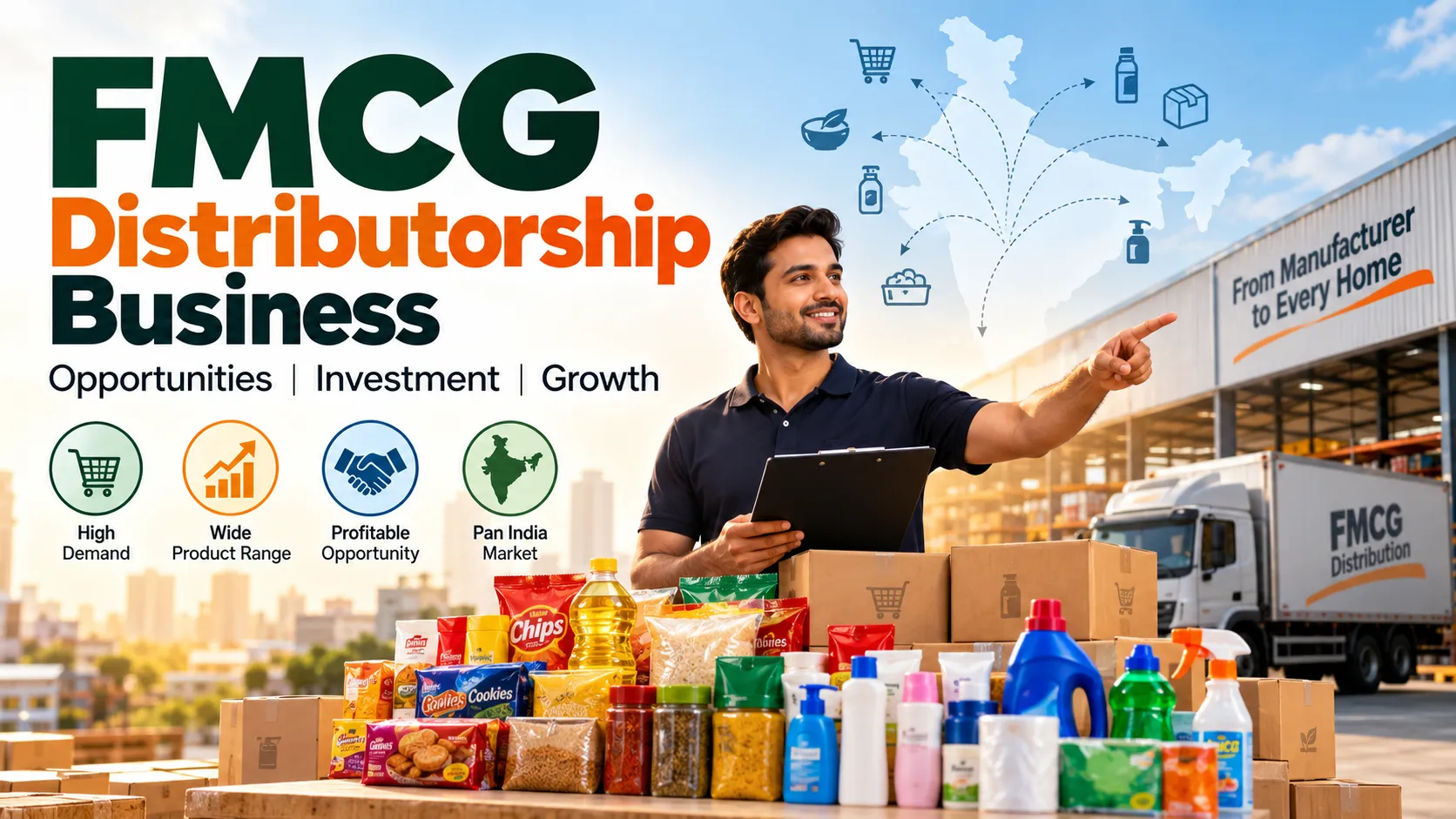
The FMCG distributorship business is one of the important opportunities for entrepreneurs looking to enter India's fast-moving consumer goods market. FMCG products such as packaged foods, spices, cooking oils, beverages, personal care products, household cleaning products, and daily essentials are purchased regularly by consumers. This consistent demand creates opportunities for manufacturers, wholesalers, retailers, and every aspiring FMCG distributor who wants to build a distribution network.
The Indian FMCG sector offers opportunities across urban, semi-urban, and rural markets. Businesses looking for FMCG distributorship, individuals searching for distributorship opportunities, and entrepreneurs posting distributorship requirements can explore different product categories based on their investment capacity, location, and business goals. With the right manufacturer and a reliable supply chain, an FMCG distribution business can develop into a sustainable commercial venture.
What Is an FMCG Distributorship Business?
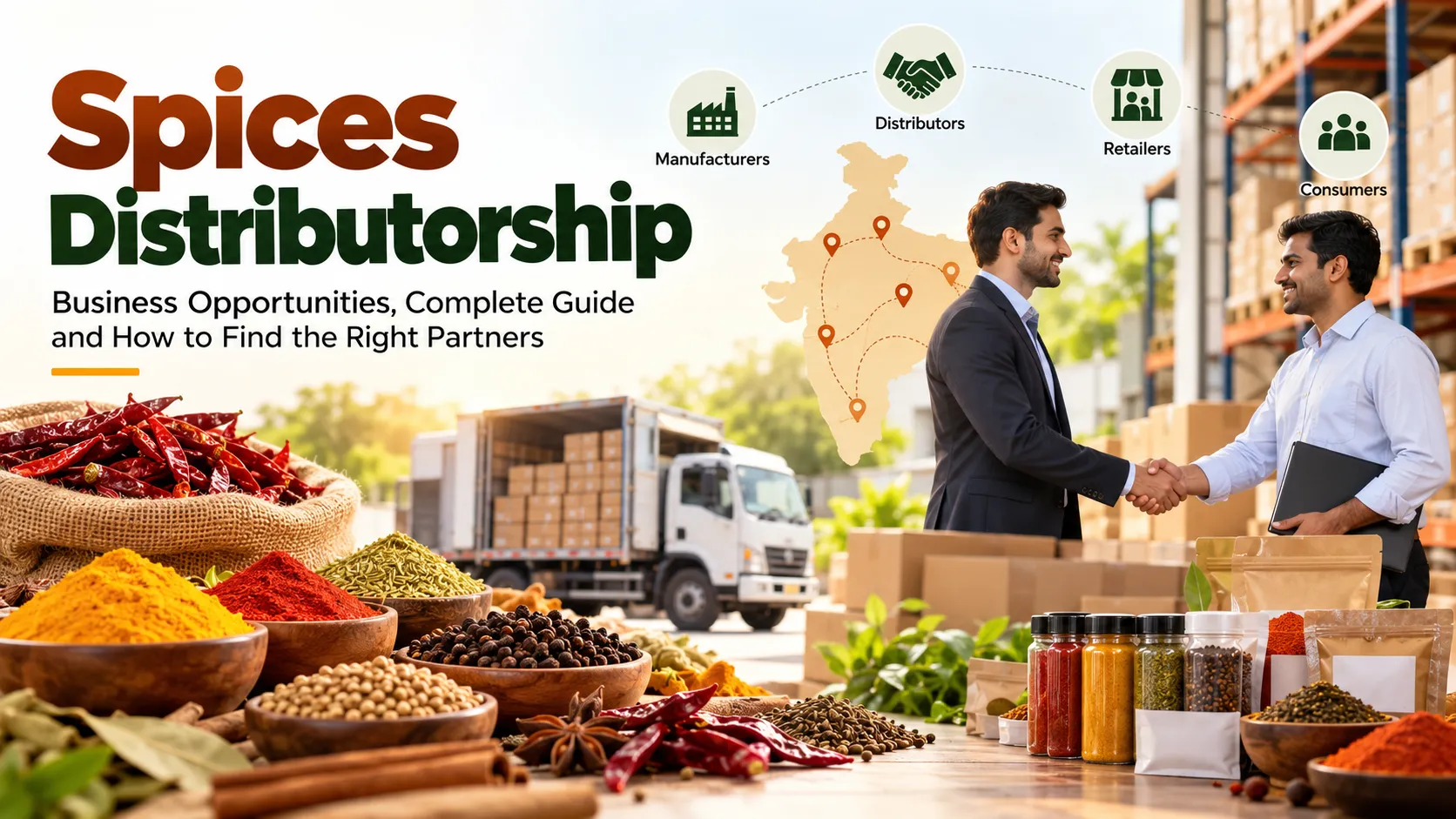
An FMCG distributorship business involves purchasing products from manufacturers or authorized suppliers and distributing them to retailers, wholesalers, supermarkets, and other sales channels. An FMCG distributor acts as a link between the company producing the goods and the businesses selling them to end consumers.
For example, a company manufacturing packaged spices may appoint an FMCG distributor to supply its products to grocery stores, supermarkets, and local retailers. The distributor manages inventory, order processing, transportation, retailer relationships, and payments according to the agreed business terms. This makes FMCG distributorship an important part of the consumer goods supply chain.
Entrepreneurs searching for distributorship needed opportunities should understand that distribution is not simply about purchasing and reselling products. It also requires market knowledge, working capital, sales planning, and the ability to maintain regular product availability.
Why Is FMCG Distributorship a Promising Business Opportunity?
The FMCG distribution business benefits from demand for products that households and businesses use frequently. Unlike products purchased only occasionally, many FMCG items need regular replenishment, which can create repeat orders for distributors who serve their markets effectively.
Here are some reasons why an FMCG distributorship may appeal to entrepreneurs:
- Regular product demand: Daily-use products often generate recurring purchasing requirements.
- Multiple product categories: Opportunities exist in food, beverages, personal care, home care, and other consumer goods.
- Different market sizes: Entrepreneurs can explore local, district-level, regional, or larger distribution territories.
- Retail network development: Strong retailer relationships can support long-term business growth.
- Expansion opportunities: Distributors may add more products or brands as their operations develop.
However, an FMCG distributor must also account for competition, transportation expenses, credit periods, product expiry, damaged stock, and changing retailer demand. Profitability depends on the product margins, operating costs, inventory turnover, and the terms negotiated with the manufacturer.
Types of FMCG Distributorship Opportunities in India
The FMCG distributorship market includes several product categories, allowing entrepreneurs to choose opportunities that match local demand and their operational capabilities.
1. Food Products Distributorship
Food products are an important segment of FMCG distribution. Packaged snacks, biscuits, noodles, ready-to-eat foods, confectionery, and packaged grocery products are sold through multiple retail channels.
Entrepreneurs searching for FMCG distributorship opportunities can explore food brands that have suitable products, competitive pricing, dependable supply, and clear distributor policies. Before investing, check shelf life, storage requirements, applicable food regulations, and the brand's existing market presence.
2. Spices and Masala Distributorship
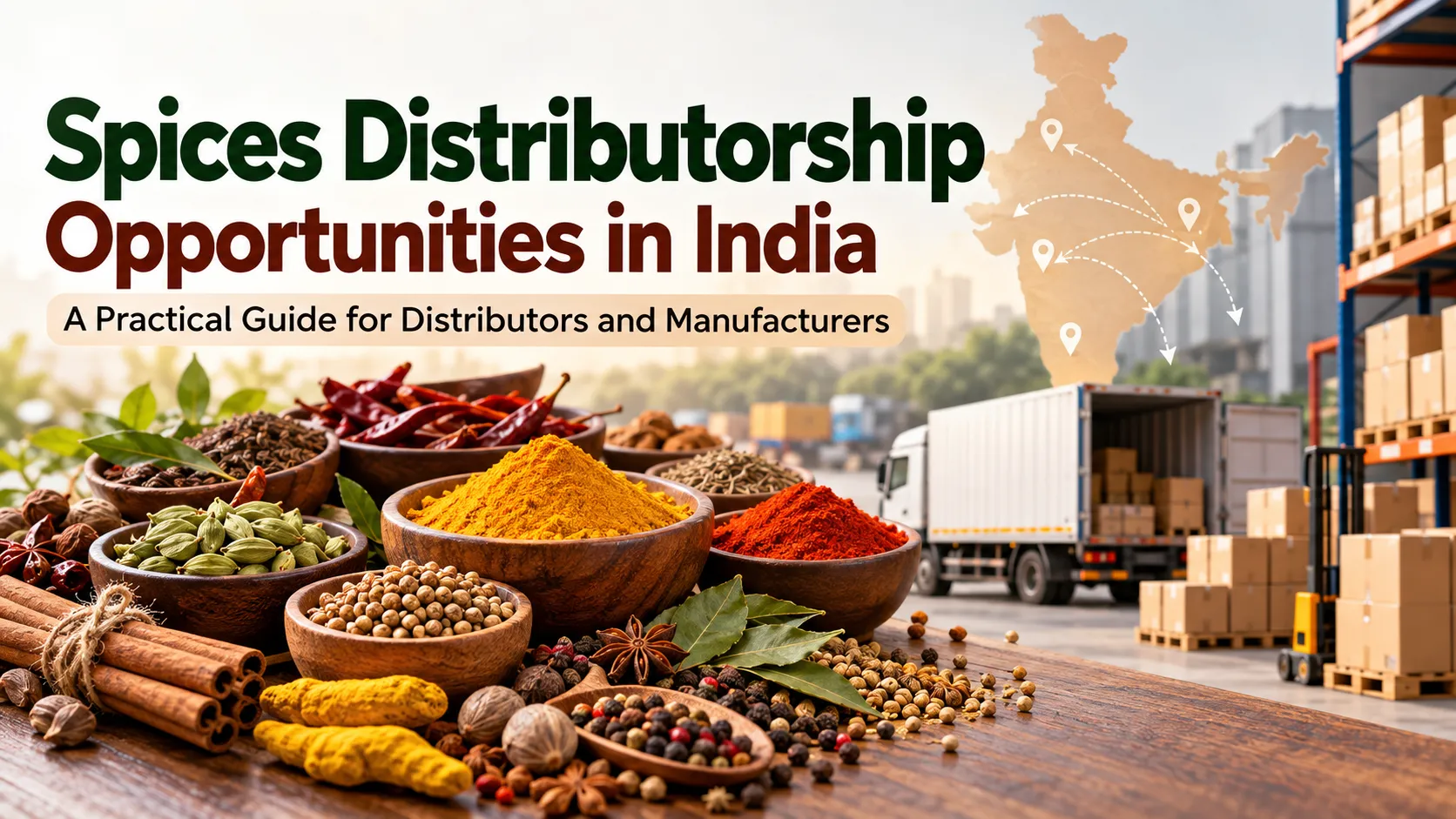
The spices and masala category offers opportunities for distributors serving grocery stores, kirana shops, supermarkets, and wholesale markets. Products such as turmeric powder, chilli powder, coriander powder, blended masalas, and whole spices can be distributed through local retail networks.
Businesses looking for a distributorship in the FMCG sector should compare the brand's product range, packaging, pricing, retailer demand, and supply consistency. A well-planned spices distributorship can be developed by focusing on reliable delivery and building relationships with retailers.
3. Cooking Oil Distributorship
Cooking oil is a frequently purchased household product with demand across retail and wholesale channels. Distribution opportunities may include edible oils, blended oils, and other packaged cooking oil products, depending on the manufacturer's portfolio.
An entrepreneur interested in an FMCG distributor opportunity in this category should evaluate storage capacity, transportation costs, packaging sizes, working capital, and applicable food safety requirements before signing a distributorship agreement.
4. Personal Care and Home Care Products
Personal care and home care products include soaps, shampoos, toothpaste, detergents, cleaning liquids, and other everyday essentials. These products are sold through general trade, modern retail, and, where supported by the brand, online channels.
For entrepreneurs searching for distributorship needed in the FMCG market, these categories can offer opportunities to build a portfolio of products serving different household requirements. The right choice depends on local demand, retailer acceptance, margins, and the company's distribution policies.
5. Beverages and Packaged Consumer Products
Packaged beverages and other consumer goods can create additional opportunities for FMCG distributors. However, some products require special storage conditions, faster inventory movement, or seasonal demand planning.
Before selecting an FMCG distributorship, entrepreneurs should examine the product's shelf life, storage needs, delivery frequency, and competition. Understanding these factors helps distributors make informed decisions instead of selecting a brand based only on its popularity.
How to Start an FMCG Distributorship Business
Starting an FMCG distributorship business requires a practical plan covering the product category, investment, distribution territory, and sales strategy. Entrepreneurs searching for FMCG distributorship wanted opportunities should follow a structured process before committing their capital.
Step 1: Research Your Local Market
The first step in FMCG distribution is understanding local demand. Identify grocery stores, supermarkets, wholesalers, convenience stores, and other potential buyers in your target area.
Study which brands are already available, what retailers need, which products sell regularly, and where competitors may be leaving gaps. Market research helps an aspiring FMCG distributor select products with realistic sales potential.
Step 2: Select the Right FMCG Product Category
The second step is choosing a product category that matches your budget, experience, and local demand. Some entrepreneurs prefer food products, while others may explore spices, edible oils, personal care items, or household cleaning products.
If you are searching for wanted distributorship opportunities, compare at least a few suitable brands before making a decision. Consider product quality, pricing, minimum order quantities, exclusivity, credit terms, and the company's ability to supply stock consistently.
Step 3: Find Manufacturers and FMCG Companies
The third step is identifying manufacturers and brands that are actively interested in expanding their distribution networks. Contact the companies directly or explore B2B platforms where manufacturers and distribution opportunities can be discovered.
An entrepreneur looking for distributorship opportunities should verify the company, its products, business registration details, commercial terms, and authorization process. Avoid paying an upfront fee to an unverified party merely because it promises an exclusive territory or guaranteed profits.
Step 4: Calculate Your Investment and Working Capital
The fourth step is preparing an investment plan for your FMCG distribution operation. Your budget may need to cover initial inventory, storage, transport, staff, business registration, billing systems, and retailer credit.
There is no single investment amount for every FMCG distributorship. A small local operation may have very different requirements from a district-level or regional distribution business. Obtain written quotations and calculate your expected monthly expenses before deciding how much capital to commit.
Step 5: Complete Business and Compliance Requirements
The fifth step is completing the registrations and licences applicable to your business and product category. Requirements may include business registration, GST registration where applicable, and specific food-related licences or other regulatory approvals depending on the products and business structure.
An FMCG distributor should also maintain purchase invoices, sales records, stock reports, and payment documentation. Consult the relevant authorities or a qualified professional to confirm the requirements applicable to your particular operation.
Step 6: Build Your Retailer Network
The sixth step is developing relationships with retailers and wholesale buyers. Visit potential customers, share product catalogues, explain commercial terms, and understand their ordering requirements.
A successful FMCG distributorship depends on more than obtaining a manufacturer's appointment. Consistent service, reliable deliveries, competitive commercial terms, and prompt issue resolution help distributors build repeat business.
How Much Investment Is Required for FMCG Distributorship?
The FMCG distributorship investment depends on the product category, company requirements, geographic territory, stock levels, storage facilities, and distribution model. There is no universal investment figure that applies to every FMCG distributor.
Before selecting an opportunity, prepare a budget covering:
- Initial inventory and minimum order quantities.
- Warehouse or storage expenses.
- Delivery vehicles, fuel, and logistics.
- Staff salaries and operating expenses.
- Retailer credit and payment collection.
- Applicable licences, registrations, and administrative costs.
- Emergency funds for unexpected expenses.
Entrepreneurs searching for FMCG distributorship wanted should ask manufacturers for a detailed cost breakdown. Check whether any security deposit is refundable, whether a minimum sales target applies, and whether the company provides promotional support.
A realistic financial plan should include a break-even estimate based on expected sales and actual operating costs. Remember that turnover is not the same as profit, and a distributor may need sufficient working capital even when sales are growing.
How to Find FMCG Distributorship Opportunities Through GrowDistributors
GrowDistributors.com is a B2B platform designed to connect manufacturers, brands, and distributors. For businesses exploring FMCG distributorship, a relevant B2B platform can provide another channel for discovering companies, reviewing product categories, and identifying potential distribution opportunities.
Entrepreneurs searching for FMCG distributor, wanted distributorship, or distributorship needed can explore GrowDistributors to discover relevant business opportunities and connect with companies seeking distribution partners. Instead of relying exclusively on informal advertisements or scattered enquiries, businesses can use a dedicated B2B platform as part of their manufacturer discovery and networking process.
For FMCG manufacturers, GrowDistributors.com can also serve as a channel to present their brands and products to businesses interested in distribution. Companies looking to expand into new cities, districts, and retail markets can use B2B visibility and business networking to support their distributor search.
If you are looking for FMCG distributorship in India, visit GrowDistributors.com to explore the platform and identify potentially relevant business connections. Review individual company profiles and product information, then contact the concerned business to confirm availability, eligibility, investment requirements, territory rights, and commercial terms.
GrowDistributors should be treated as a starting point for business discovery rather than a guarantee of distributorship approval, exclusive territory, or financial returns. Always conduct due diligence before entering into an agreement or making a payment.
Benefits of Using a B2B Platform for FMCG Distribution
A B2B platform for FMCG distributorship can help businesses improve the way they discover potential partners. Manufacturers and distributors often face challenges when trying to identify suitable companies, communicate product requirements, and establish new commercial relationships.
A dedicated platform such as GrowDistributors.com can support the discovery process by bringing business opportunities and relevant company information into one online environment. For an entrepreneur searching for distributorship wanted opportunities, this can make it easier to begin researching potential brands and initiating business enquiries.
Manufacturers can also benefit from improved online visibility among businesses interested in becoming distributors. A clear product catalogue, company profile, business contact information, and well-defined distribution requirements can help make enquiries more relevant.
However, the quality of a B2B connection depends on the accuracy of the information provided and the suitability of the business relationship. Every FMCG distributor should independently verify the manufacturer, product quality, agreement, and payment terms.
How to Evaluate an FMCG Distributorship Opportunity
Choosing the right FMCG distributorship is an important business decision. Before signing an agreement, evaluate the brand's reputation, product demand, pricing, margins, distribution territory, and operational requirements.
Use the following checklist when reviewing an opportunity:
- Product demand: Is there sufficient demand in your target market?
- Brand credibility: Can the manufacturer provide verifiable business details and product documentation?
- Commercial terms: Are margins, payment terms, minimum orders, and sales targets clearly documented?
- Territory rights: Is the proposed territory exclusive, shared, or non-exclusive?
- Supply reliability: Can the company deliver stock consistently?
- Marketing support: Does the brand provide catalogues, promotional material, or retailer support?
- Return and expiry policies: Are damaged, defective, or expired products handled under clear written terms?
- Financial viability: Can expected gross margins cover your actual operating expenses?
Entrepreneurs who find an opportunity through GrowDistributors or another B2B source should use these checks before investing. A credible FMCG distributorship should have transparent terms and a business model that makes sense for both the manufacturer and the distributor.
Common Challenges in the FMCG Distribution Business
The FMCG distribution business can offer growth opportunities, but it also involves practical challenges that need careful management. Competition, thin margins in some categories, delayed payments, and rising logistics costs can affect business performance.
One major challenge for an FMCG distributor is maintaining the right inventory level. Excess stock can tie up capital or expire, while insufficient stock can result in missed sales and dissatisfied retailers.
Another challenge is collecting payments on time. Distributors who extend credit to retailers should establish clear credit limits, payment schedules, and follow-up procedures. Good financial discipline is essential for maintaining cash flow.
Entrepreneurs searching for FMCG distributorship wanted should also be cautious about unrealistic income promises. Sales, margins, and profitability depend on product demand, business expenses, operational efficiency, and the agreement with the manufacturer.
Marketing Strategies for Growing an FMCG Distributorship
A well-planned FMCG distributor marketing strategy can help businesses expand their retailer network and increase product movement. Distributors should focus on making their products accessible, maintaining strong relationships, and identifying areas where additional demand can be developed.
Useful strategies include:
- Visiting retailers and wholesalers regularly.
- Providing updated product catalogues and price lists.
- Maintaining reliable order-taking and delivery schedules.
- Tracking fast-moving and slow-moving products.
- Using WhatsApp Business for appropriate customer communication.
- Creating local awareness campaigns with manufacturer-approved promotional materials.
- Monitoring outstanding payments and repeat orders.
- Expanding into new areas only when the existing operation is financially sustainable.
For manufacturers seeking an FMCG distributor, clear communication of product benefits, commercial terms, and territory requirements can improve the quality of enquiries. B2B platforms such as GrowDistributors.com can complement direct outreach by helping companies present their distribution opportunities online.
Future Scope of the FMCG Distributorship Business in India
The future of the FMCG distributorship business in India will continue to depend on consumer demand, retail expansion, competition, logistics, and changing purchasing habits. Digital tools, improved inventory management, and better business communication can help distributors manage their operations more effectively.
Smaller manufacturers may look for new distribution partners to reach markets beyond their existing locations. At the same time, aspiring distributors may seek regional brands, emerging product categories, and opportunities to serve underserved retail areas.
For businesses searching for distributorship needed, wanted distributorship, or FMCG distributor opportunities, combining local market research with online business discovery can provide a practical starting point. GrowDistributors.com can be one of the platforms to explore while evaluating potential manufacturer connections.
The key to sustainable growth is to select suitable products, understand the financial requirements, build a dependable retail network, and maintain professional relationships with manufacturers and customers.
Conclusion
The FMCG distributorship business can be an attractive option for entrepreneurs who understand their market and are prepared to manage inventory, logistics, retailer relationships, and working capital responsibly. Opportunities exist across food products, spices, cooking oils, personal care, home care, and other fast-moving consumer goods.
Whether you are an entrepreneur searching for FMCG distributorship wanted, a business owner posting wanted distributorship requirements, or a manufacturer looking for an FMCG distributor, careful research is essential before making a commitment.
Explore GrowDistributors.com to discover B2B business connections and investigate potential FMCG distribution opportunities. Verify every company and its terms independently, calculate the expected costs, and choose a business opportunity aligned with your resources and market demand.
Frequently Asked Questions (FAQs)
1. How can I find an FMCG distributorship in India?
To find an FMCG distributorship in India, research manufacturers, contact brands directly, and explore B2B platforms such as GrowDistributors.com. Compare product demand, investment requirements, margins, and territory conditions before applying.
2. Where can I find FMCG distributor opportunities?
Entrepreneurs looking for FMCG distributor opportunities can explore manufacturer websites, industry networks, trade exhibitions, and B2B platforms. GrowDistributors.com is one option for discovering potential manufacturer and distributor connections.
3. What does FMCG distributorship wanted mean?
The phrase FMCG distributorship wanted generally means that an individual or business is looking for an opportunity to distribute fast-moving consumer goods. Applicants should specify their preferred product category, target location, investment capacity, and distribution experience when contacting manufacturers.
4. How much investment is needed to start an FMCG distributorship business?
The investment required for an FMCG distributorship business varies according to the product category, stock requirements, territory, logistics, and manufacturer policies. Request a detailed cost estimate and calculate working capital and operating expenses before committing funds.
5. How can manufacturers find distributors through GrowDistributors?
Manufacturers can explore GrowDistributors.com to present their business and products and seek relevant distribution connections. Interested distributors should contact the company to verify distributorship availability, eligibility, commercial terms, and other requirements before entering into an agreement.