Distributorship Opportunities in India: Find the Right Business Opportunity and Become a Distributor
Distributorship Opportunities in India: Find the Right Business Opportunity and Become a Distributor
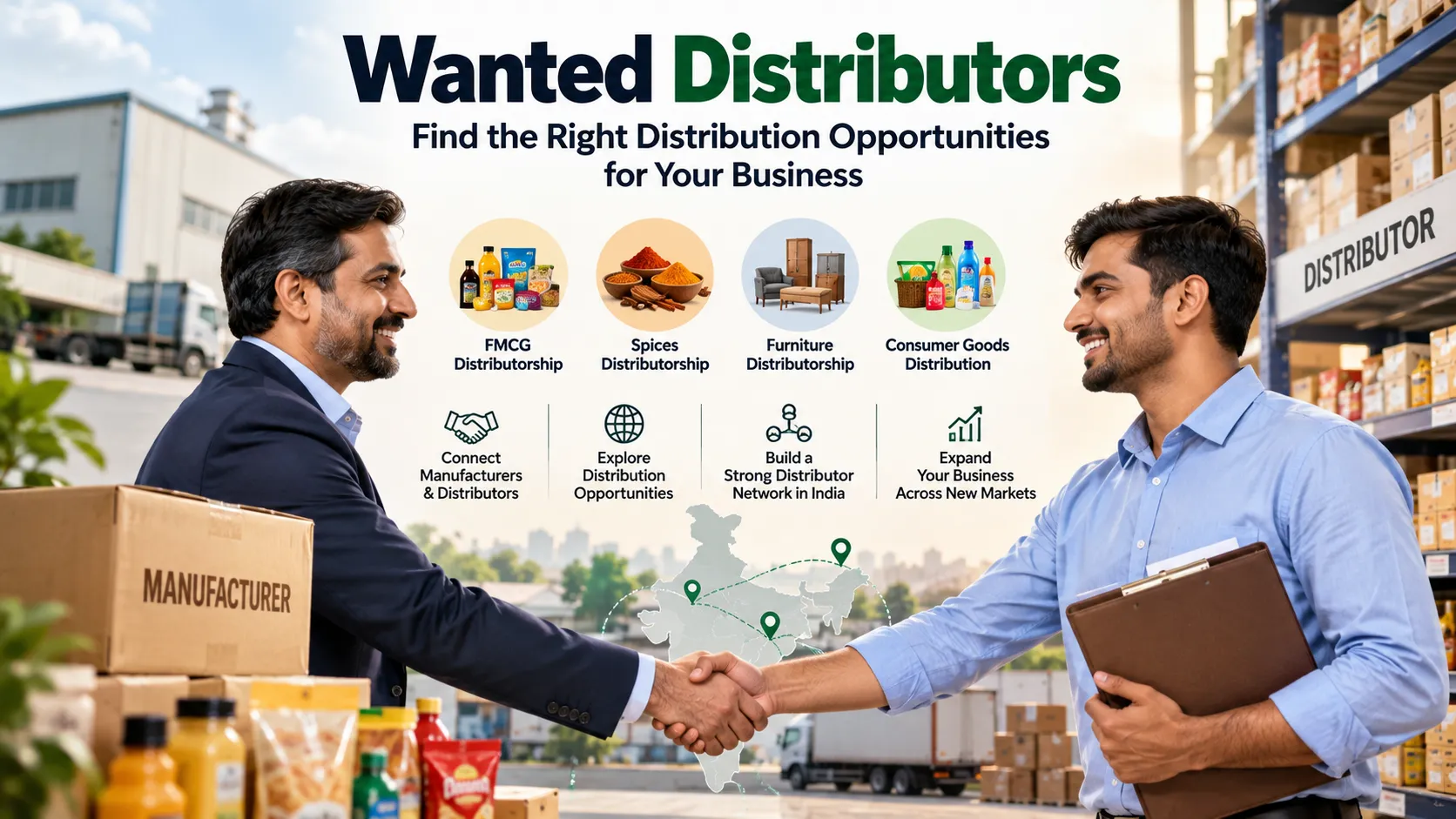
If you're actively searching for distributorship opportunities in India, you're probably looking for more than general information.
You want to find a product, connect with a manufacturer and understand whether the opportunity is worth investing in.
That's where the selection process becomes important.
Not every distribution opportunity is suitable for every entrepreneur. A product may have excellent margins but weak demand. Another may have strong demand but intense competition. Some manufacturers may provide excellent support, while others may expect the distributor to handle almost everything independently.
So before you became a distributor, you need to evaluate the complete opportunity.
What Are Distributorship Opportunities?
A distributorship opportunity is a business arrangement where a manufacturer or brand works with a distributor to sell its products within a specific market or territory.
The distributor may handle:
- Product purchasing
- Inventory
- Warehousing
- Retailer development
- Sales
- Transportation
- Market expansion
- Order management
The exact responsibilities depend on the manufacturer.
For entrepreneurs, this can be an alternative to building a product and brand completely from scratch.
Why Are Manufacturers Looking for Distributors?
Manufacturers often need distribution partners when they want to expand into new markets.
A company may already have:
- A product
- Manufacturing facilities
- Packaging
- Brand identity
- Marketing material
But it may not have enough local retailers or sales infrastructure.
That's why you may come across requirements such as distributor needed or distributors required for new products.
A suitable distributor can help bridge the gap between the manufacturer and the local market.
How to Find the Right Distributorship Opportunity
1. Decide Which Category You Want
Don't start by searching for every opportunity available.
First decide which product category fits your experience and market.
Popular categories include:
FMCG
Food, beverages, snacks, personal care, and household products.
Agriculture
Agricultural tools, farming equipment, and related supplies.
Health & Personal Care
Beauty, skincare, hygiene, and personal-care products.
Ayurvedic Products
Herbal and Ayurvedic products.
Home Care
Cleaning products and household supplies.
Apparel & Fashion
Clothing and fashion products.
Electronics
Electronic and electrical products.
Industrial Products
Machinery, equipment and industrial supplies.
A focused search can help you identify more relevant distributor opportunities.
2. Study Your Local Market
Before investing, understand the market you're planning to serve.
Ask:
- How many potential retailers are there?
- What products are already popular?
- Who are the competitors?
- What price range do customers prefer?
- Is there a gap in the market?
- Can you reach enough retailers?
Local demand should be one of the first things you investigate.
3. Calculate the Required Investment
The manufacturer's initial investment figure isn't necessarily your total business cost.
You may need money for:
- Initial inventory
- Warehouse
- Transportation
- Employees
- Sales team
- Marketing
- Working capital
- Technology
- Administrative expenses
Keep enough working capital for daily operations rather than putting everything into initial inventory.
4. Evaluate Distributor Margins
Suppose:
Product purchase price = ₹80
Selling price = ₹100
Your gross margin is ₹20.
But this isn't necessarily your net profit.
You may still have:
- Transportation costs
- Warehouse expenses
- Salaries
- Sales expenses
- Damaged stock
- Credit costs
Therefore, calculate the expected profit after operating expenses.
A lower-margin product with high turnover can sometimes be more attractive than a high-margin product that sells slowly.
5. Check the Manufacturer's Reputation
Before accepting an opportunity, research the company.
Look at:
- Company history
- Product quality
- Existing market presence
- Production capacity
- Customer feedback
- Distribution network
- Marketing support
- Supply consistency
If the manufacturer cannot supply products consistently, your retailer relationships can suffer.
6. Understand Territory Rights
Ask exactly what territory you're receiving.
It could be:
- City
- District
- State
- Region
- Multiple states
If exclusivity is promised, make sure the conditions are clearly mentioned in the agreement.
Ask whether the manufacturer can appoint another distributor in the same territory.
FMCG Distributor Wanted? Here's What to Check
FMCG is one of the most frequently explored distribution categories because consumers regularly purchase these products.
But seeing an FMCG distributor wanted advertisement doesn't automatically mean the opportunity is profitable.
Check:
Product Demand
Are retailers actually interested?
Product Turnover
How quickly can the product reasonably move?
Shelf Life
How long can inventory be stored?
Competition
Which established brands already dominate?
Margin
What is your realistic margin after expenses?
Retailer Network
How many outlets can you reach?
These factors should be considered together.
What If You Are Searching for “Distributor Needed” Opportunities?
If your search is specifically around distributor needed requirements, don't immediately contact every manufacturer.
Create a basic checklist first.
Your Profile
- Location
- Investment capacity
- Warehouse availability
- Existing retailer network
- Product-category experience
- Sales team
Opportunity Details
- Product
- Manufacturer
- Territory
- Margin
- Minimum order
- Marketing support
- Payment terms
Then compare opportunities based on actual business potential.
How GrowDistributors Can Help
For entrepreneurs searching for distributorship opportunities, discovering suitable manufacturers can sometimes be difficult.
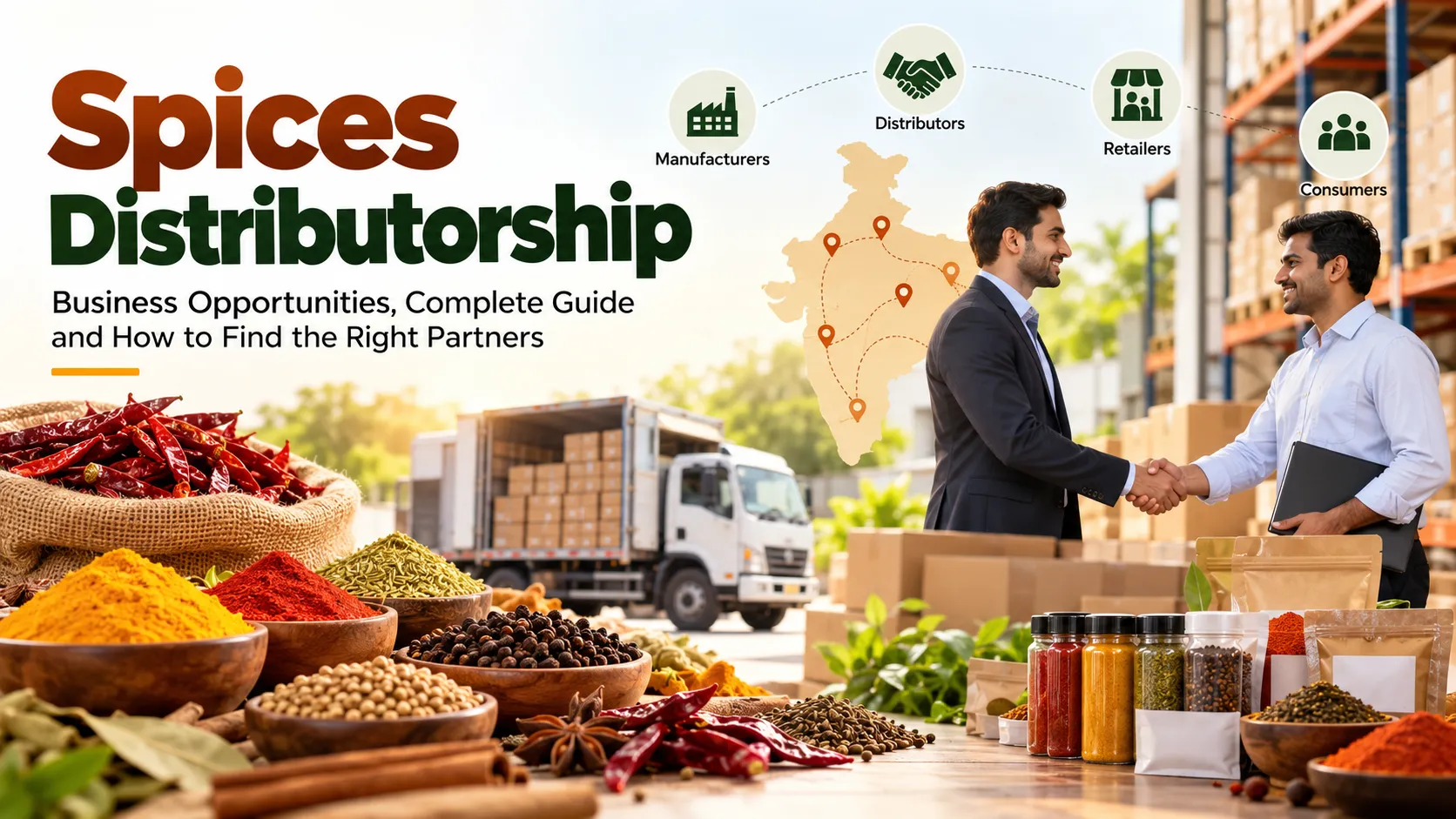
GrowDistributors provides a B2B environment where manufacturers and brands can showcase their distribution requirements and potential business partners can explore opportunities.
For example, a manufacturer launching a new FMCG product may be searching for distributors in specific locations.
A potential distributor interested in FMCG can explore such opportunities and decide which ones match their:
- Location
- Investment
- Product interest
- Business experience
- Market access
Similarly, manufacturers with distributors required for new products can use a specialized distribution platform to make their requirements visible to potential partners.
GrowDistributors can therefore serve both sides of the distribution ecosystem.
How to Approach a Manufacturer
Once you find an interesting opportunity, don't send a simple message saying:
“I want distributorship.”
Instead, introduce yourself professionally.
Mention:
- Your location
- Relevant business experience
- Product-category experience
- Retailer network
- Warehouse availability
- Approximate investment capability
- Territory you're interested in
This gives the manufacturer a better understanding of your profile.
Questions to Ask Before Investing
Before signing anything, ask:
- What is the initial investment?
- What is the minimum order quantity?
- What distributor margin is offered?
- Are there additional schemes or incentives?
- Is the territory exclusive?
- What sales targets apply?
- What marketing support is provided?
- Who handles transportation?
- How are damaged products handled?
- What are the payment terms?
Getting these details in writing can help you make a more informed decision.
Warning Signs to Watch Out For
Be cautious if a company:
- Guarantees unrealistic profits
- Doesn't provide clear company information
- Avoids written agreements
- Demands large payments without transparency
- Cannot explain product demand
- Makes guaranteed sales claims
- Doesn't clearly explain territory rights
A genuine business opportunity should be evaluated through proper due diligence.
Frequently Asked Questions
How can I find distributorship opportunities in India?
You can search manufacturer websites, trade exhibitions, industry networks, referrals and B2B platforms such as GrowDistributors for relevant distribution opportunities.
How much money do I need to become a distributor?
There is no fixed amount. Investment depends on the product category, manufacturer, inventory requirement, territory, warehouse and working capital.
Is FMCG distribution a good business?
FMCG can be an attractive category because many products have recurring consumer demand. However, profitability depends on the specific product, competition, margins, turnover and operating costs.
What should I do if a manufacturer says “distributor needed”?
First verify the manufacturer and product, then ask about investment, territory, margins, minimum order, sales targets and support before making any payment or signing an agreement.
Can a new entrepreneur become a distributor?
Yes, depending on the manufacturer's requirements. Having adequate capital, market knowledge, sales capability and infrastructure can improve your chances of finding a suitable opportunity.
Final Thoughts
Searching for distributorship opportunities is easy. Finding an opportunity that actually fits your business is the difficult part.
Before you became a distributor, look at the entire picture:
Product Demand + Investment + Margin + Territory + Competition + Manufacturer Support
For manufacturers, the challenge is finding capable partners when distributors required for new products.
For entrepreneurs, the challenge is finding a manufacturer whose product can realistically succeed in their market.
Platforms such as GrowDistributors can help bring these two sides together by providing a focused B2B environment for discovering distribution opportunities.
The best distribution business isn't necessarily the one promising the highest margin. It's the one where the product has demand, the numbers make sense, and both manufacturer and distributor can grow together.