Low-Investment Distributorship Opportunities in India: How to Choose the Right One
Starting a distribution business doesn't always mean investing a huge amount of money.
Depending on the product category, territory and manufacturer requirements, entrepreneurs can find distribution opportunities with different investment levels.
This is why searches for distributorship opportunities and distributor opportunities continue to attract people who want to build a business by partnering with established brands and manufacturers.
But there's an important point to remember:
Low investment does not automatically mean low risk or high profit.
Before choosing an opportunity, you should understand the product, market demand, margins, working capital and manufacturer terms.
What Is a Low-Investment Distributorship?
A low-investment distributorship is generally an opportunity where the initial financial requirement is relatively lower compared with larger distribution operations.
The exact investment can vary depending on:
- Product category
- Minimum order quantity
- Territory
- Inventory requirement
- Warehouse requirements
- Transportation
- Manufacturer policies
For someone who wants to become a distributor with limited capital, choosing the right product and business model is especially important.
Which Categories Can Offer Distribution Opportunities?
There isn't one category that works for everyone.
Entrepreneurs can explore opportunities across industries such as:
FMCG
Food, beverages, grocery and everyday consumer products.
Agriculture
Farming equipment, agricultural products and related supplies.
Personal Care
Beauty, hygiene and personal-care products.
Ayurvedic Products
Herbal and traditional wellness-related products.
Home Care
Cleaning products and household supplies.
Apparel & Fashion
Clothing and fashion-related products.
Electronics
Consumer electronics and electrical products.
The right category depends on your local market and existing business network.
Why FMCG Attracts New Distributors
One of the most searched areas is the FMCG distributor wanted.
FMCG products can have recurring demand because consumers purchase many of them regularly.
However, that doesn't mean every FMCG opportunity will automatically be successful.
Before investing, check:
- Product demand
- Retailer acceptance
- Competition
- Distributor margin
- Product shelf life
- Inventory turnover
- Manufacturer support
A product that sells regularly can be more valuable than one offering a high margin but very low turnover.
How Much Money Do You Need?
There isn't one fixed amount required to become a distributor.
Your total requirement may include:
Inventory + Working Capital + Storage + Transportation + Sales Expenses
For example, you may need money not only to purchase your initial stock but also to maintain operations until retailer payments are received.
Therefore, always ask the manufacturer about the complete investment requirement, rather than focusing only on the minimum order value.
6 Things to Check Before Choosing an Opportunity
1. Product Demand
Research whether customers and retailers actually need the product.
2. Manufacturer Reputation
Check the company's background, product quality and supply capability.
3. Margin
Understand the actual margin after discounts and operating costs.
4. Territory
Know exactly which location you will be allowed to serve.
5. Competition
Research competing products and brands in your market.
6. Support
Ask what kind of marketing, product and sales support the manufacturer provides.
Where Can You Find Distributor Opportunities?
If you're actively searching for distributor opportunities, you can explore several channels:
- Manufacturer websites
- Trade exhibitions
- Business networks
- Industry associations
- Referrals
- B2B marketplaces
- Distribution platforms
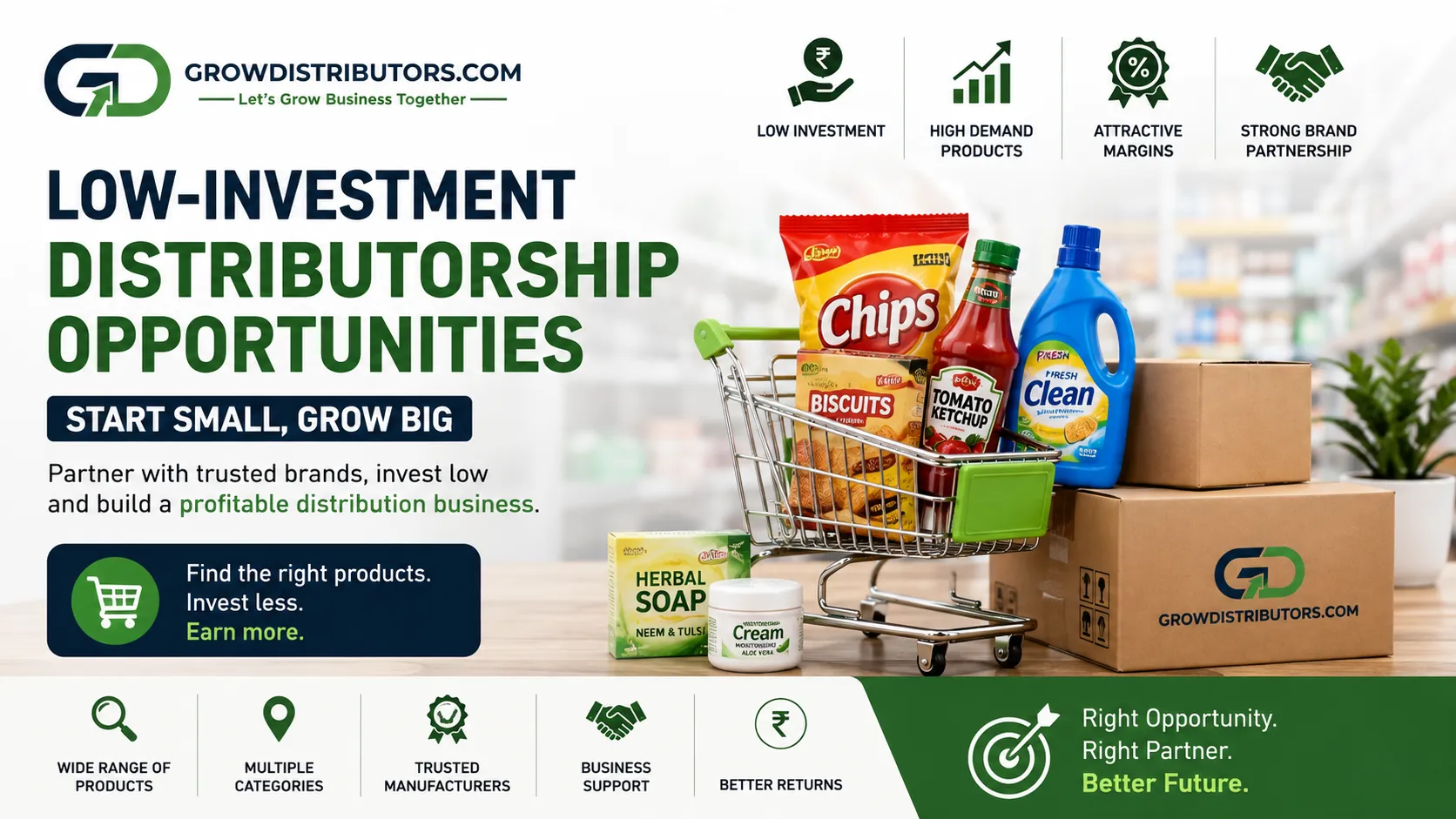
GrowDistributors can also help entrepreneurs discover manufacturers and brands offering distribution opportunities.
At the same time, manufacturers who have a distributor needed requirement can use the platform to reach potential business partners.
This creates an opportunity for both sides to connect.
What Questions Should You Ask a Manufacturer?
Before making an investment, ask:
- What is the total initial investment?
- What is the minimum order quantity?
- What margin is offered?
- Is the territory exclusive?
- What sales targets apply?
- What marketing support is provided?
- What are the payment terms?
- How quickly can products be supplied?
- What happens to damaged or expired stock?
- Is there a written distribution agreement?
Getting clear answers before investing can help you make a more informed decision.
Red Flags to Avoid
Be careful if someone promises:
- Guaranteed profits
- Guaranteed monthly income
- Unrealistically high margins
- Guaranteed sales without evidence
- Unclear company information
- Large upfront payments without proper documentation
A genuine business opportunity should be evaluated on its actual commercial fundamentals.
What If You Are Looking for New Products?
Some manufacturers actively advertise distributors required for new products when entering new markets.
These opportunities can be interesting because the distributor may get an opportunity to develop a relatively new product in their territory.
However, new products can also carry more uncertainty.
Before investing, find out:
- Where the product is already available
- Whether it has existing sales
- Who the target customers are
- What marketing support exists
- What makes the product different
- How much initial stock is required
Frequently Asked Questions
Can I become a distributor with a small investment?
It depends on the manufacturer, product category, MOQ, territory and infrastructure requirements. Some opportunities may have lower entry requirements than others.
How can I find low-investment distributorship opportunities?
You can explore manufacturers, B2B platforms, industry events and specialized distribution platforms such as GrowDistributors.
Is FMCG distribution suitable for beginners?
It can be, but beginners should first understand the product, local market, retailer network, investment and operating requirements.
What does “distributor needed” mean?
It means a manufacturer or brand is looking for a business partner to distribute its products in a particular market or territory.
How do I choose the best distributor opportunity?
Compare product demand, investment, margins, competition, territory, manufacturer reputation, support and potential sales before making a decision.
Final Thoughts
Finding the right distributorship opportunities is about more than finding the lowest investment.
A successful distribution business requires a product that people want, a market where you can sell it, reasonable margins and a manufacturer that can support the relationship.
Whether you're searching for an FMCG distributor wanted opportunity, looking to became a distributor, or exploring broader distributor opportunities, research the complete business model before investing.
And if you're looking for potential manufacturers and distribution opportunities, GrowDistributors can be one of the platforms worth exploring.
Choose the opportunity based on business potential—not just the investment amount.